

Commodity market seasonality refers to recurring patterns or trends in commodity prices, supply, or demand that occur during specific times of the year. These seasonal commodity trends can influence markets as production cycles, harvest, consumer demand, and other factors follow predictable annual patterns.
The commodity markets that are especially influenced by seasonality include corn, soybeans, gasoline, and beef, among many others. Seasonality can influence a wide range of markets.
Understanding commodity price seasonality is important when analyzing commodity markets because recurring changes in supply and demand can influence prices throughout the year. However, seasonal patterns are tendencies rather than guarantees and should be considered alongside broader market fundamentals.
Corn and soybeans: growing season and harvest
One of the clearest examples of seasonal commodity trends can be seen in the growing and marketing cycles for corn and soybeans.
Corn and soybeans generally follow a similar production cycle, with planting occurring in the spring and harvest taking place in the fall. During the growing season, the crop available for sale is generally referred to as old crop, meaning it was harvested during the previous growing season. Once harvest begins, new crop supplies enter the market.
As the growing season progresses, expectations for the size of the incoming crop can influence commodity futures. When old crop supplies become tighter ahead of harvest, prices can receive seasonal support. Conversely, the arrival of new crop supplies following harvest can create seasonal pressure as additional grain becomes available to the market.
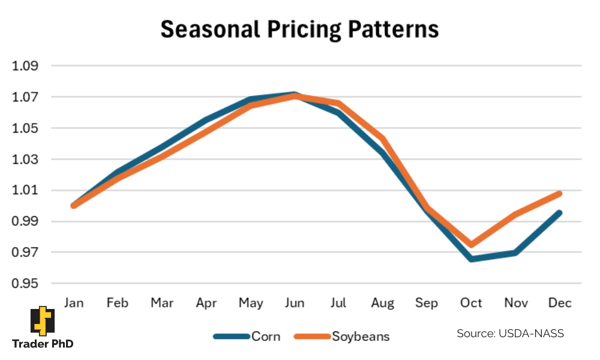
This supply-driven seasonality is one reason grain markets often experience recurring seasonal price patterns around planting and harvest. However, weather, crop conditions, demand, and other market factors can significantly alter those patterns from year to year.
Considering seasonality, the best time of year to sell corn and soybean futures is generally in the spring and early summer as prices often face harvest pressure in the fall.
Similar trends are seen with wheat prices. Prices tend to decline into July and directly correlates with the peak harvest period for Soft Red Winter (SRW) wheat, which floods the physical market with supply and pushes cash prices to their lowest levels of the year.
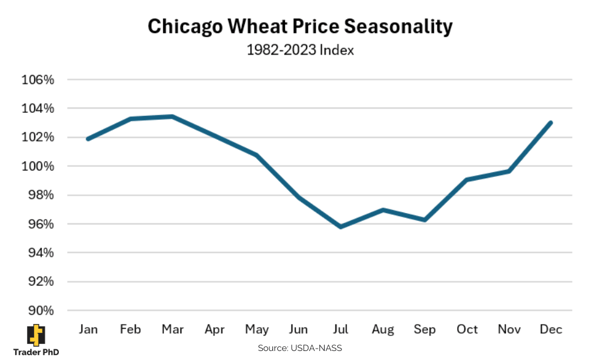
Prices experience a very brief, mild bump in August facing slight pressure in September. That is largely due to the spring wheat harvest adding a secondary wave of supply to the market during that time period.
Summer driving and grilling season
Summer is a key time period that expresses seasonal trends in various markets. Seasonality can also be driven by changes in consumer demand. Gasoline and beef are two prominent examples of commodities that can experience seasonal demand during the summer.
Summer brings increased travel and driving, helping boost gasoline demand from consumers. Stronger demand can contribute to higher gasoline prices, while demand typically eases as summer comes to an end and fall begins.
Beef also benefits from increased seasonal demand during the summer grilling season. Memorial Day, Independence Day, and Labor Day, along with summer weekends, typically bring more opportunities for outdoor grilling and can increase consumer demand for grill-friendly beef cuts.
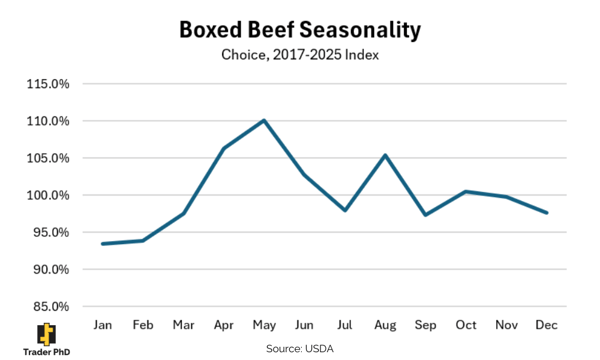
Stronger seasonal beef demand can influence the cattle market by supporting demand for cattle and potentially contributing to higher cattle prices. Additionally, higher beef production in the months that follow peak peak demand can
Seasonality is a tendency, not a guarantee
From harvest pressure in corn and soybeans, to increased summer demand for gasoline and beef, seasonal factors can influence commodity markets throughout the year.
While seasonality can provide valuable insight into commodity markets, seasonal trends are not always predictable or consistent. Seasonality is therefore best used as one tool for understanding market behavior, rather than a guarantee of where prices will move.
Combining seasonality with fundamental analysis, commodity futures, supply and demand data, and current market conditions can provide a more complete view of the commodity market outlook.
FREQUENTLY ASKED QUESTIONS
How does seasonality affect commodity prices?
Seasonality can affect commodity prices through both supply-driven and demand-driven factors. Agricultural commodities such as corn, soybeans, wheat, cotton, and cattle are influenced by production and harvest cycles, while energy markets such as gasoline and natural gas can experience seasonal changes in consumer demand.
How do traders use commodity seasonality?
Traders can use seasonal trends as one component of commodity market analysis. Historical patterns can help identify periods when supply, demand, or prices have behaved in specific ways. When seasonality can be combined with fundamental analysis, commodity futures data, weather, government reports, export demand, and other market indicators is when context can be most helpful.
Which commodities are most affected by seasonality?
Seasonality can influence a wide range of commodity markets, especially those with recurring producing or consumption cycles such as:
- Most grains (corn, soybeans, wheat, cotton): planting, growing season, and harvest
- Most livestock (cattle, hogs): consumer demand, production cycles
- Gasoline: summer driving demand, refinery utilization
- Natural gas: winter heating, summer electricity demand
- Crude oil: seasonal transportation demand, refinery activity
PAST PERFORMANCE IS NOT INDICATIVE OF FUTURE RESULTS. FUTURES TRADING INVOLVES SUBSTANTIAL RISK AND IS NOT SUITABLE FOR ALL INVESTORS.